

Give the Gift of Choice!
Too many options? Treat your friends and family to their favourite stores with a Bayshore Shopping Centre gift card, redeemable at participating retailers throughout the centre. Click below to purchase yours today!Purchase HereHome
The Verbal Icon: Studies In The Meaning Of Poetry
Coles
Loading Inventory...
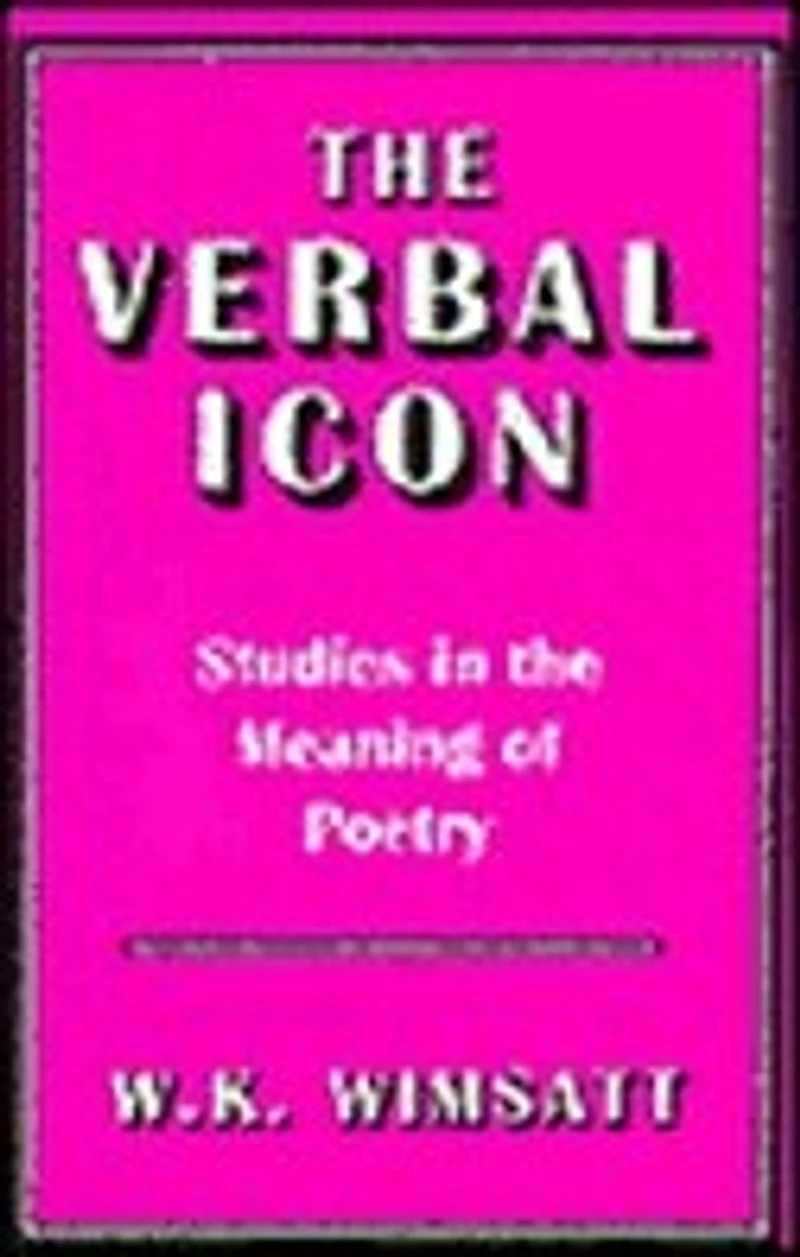
The Verbal Icon: Studies In The Meaning Of Poetry in Ottawa, ON
Current price: $48.95

The Verbal Icon: Studies In The Meaning Of Poetry in Ottawa, ON
Current price: $48.95
Loading Inventory...
Size: Paperback
*Product information may vary - to confirm product availability, pricing, shipping and return information please contact Coles
The sixteen essays in this volume form a series of related focuses upon various levels and areas of literary criticism. Mr. Wimsatt's assumption is that practice and theory of both the past and the present are integrally related-that there is a continuity in the materials of criticism-that a person who studies poetry today has a critical concern, not merely a historical interest, in what Aristotle or Plato said about poetry. He regards the great perennial problems of criticism as arising not by the whim of a tolerantly pluralist choice, but from the nature of language and reality. With profound learning and insight, Mr. Wimsatt treats almost the whole range of literary criticism. The first group of essays deals with fallacies Mr. Wimsatt believes are involved in prevalent approaches to the literary object. The next two groups face the responsibilities of the critic who defends literature as a form of knowledge; they treat various problems of structure and style. The last group undertakes to examine the relation of literature to other arts, the relation of evaluative criticism to historical studies, and the relation of literature not only to morals, but more broadly to the whole complex of the Christian religious tradition.
The sixteen essays in this volume form a series of related focuses upon various levels and areas of literary criticism. Mr. Wimsatt's assumption is that practice and theory of both the past and the present are integrally related-that there is a continuity in the materials of criticism-that a person who studies poetry today has a critical concern, not merely a historical interest, in what Aristotle or Plato said about poetry. He regards the great perennial problems of criticism as arising not by the whim of a tolerantly pluralist choice, but from the nature of language and reality. With profound learning and insight, Mr. Wimsatt treats almost the whole range of literary criticism. The first group of essays deals with fallacies Mr. Wimsatt believes are involved in prevalent approaches to the literary object. The next two groups face the responsibilities of the critic who defends literature as a form of knowledge; they treat various problems of structure and style. The last group undertakes to examine the relation of literature to other arts, the relation of evaluative criticism to historical studies, and the relation of literature not only to morals, but more broadly to the whole complex of the Christian religious tradition.
You May Also Like







More About Coles at Bayshore Shopping Centre
Coles is renowned for its outstanding customer service and great selection of books. Along with the vast array of magazines, stationary, audio-books, children's literature, fiction, non-fiction and reference books, you can find accessories to make your reading experience more pleasurable. We can recommend the very best in reading today. We will help you search our titles for exactly what you need, and if we do not have it in stock, we will order it for you.
100 Bayshore Dr, Nepean, ON K2B 8C1, Canada
Find Coles at Bayshore Shopping Centre in Ottawa, ON
Visit Coles at Bayshore Shopping Centre in Ottawa, ON