

Give the Gift of Choice!
Too many options? Treat your friends and family to their favourite stores with a Bayshore Shopping Centre gift card, redeemable at participating retailers throughout the centre. Click below to purchase yours today!Purchase HereHome
To Wake the Nations by Eric J. Sundquist, Paperback | Indigo Chapters
Coles
Loading Inventory...
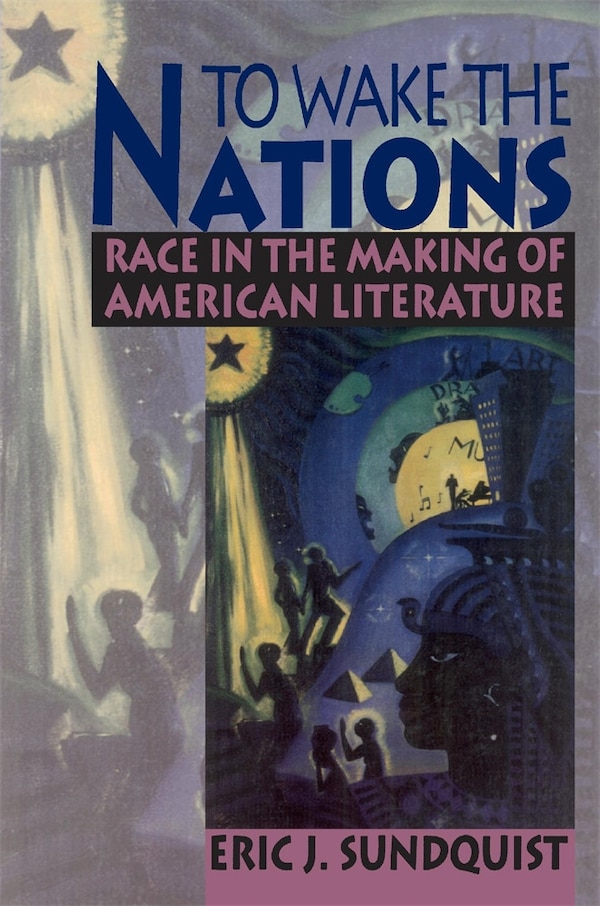
To Wake the Nations by Eric J. Sundquist, Paperback | Indigo Chapters in Ottawa, ON
By Eric J. Sundquist
Current price: $69.00

By Eric J. Sundquist
To Wake the Nations by Eric J. Sundquist, Paperback | Indigo Chapters in Ottawa, ON
Current price: $69.00
Loading Inventory...
Size: 1 x 1 x 0.8125
*Product information may vary - to confirm product availability, pricing, shipping and return information please contact Coles
This powerful book argues that white culture in America does not exist apart from black culture. The revolution of the rights of man that established this country collided long ago with the system of slavery, and we have been trying to reestablish a steady course for ourselves ever since. To Wake the Nations is urgent and rousing: we have integrated our buses, schools, and factories, but not the canon of American literature. That is the task Eric Sundquist has assumed in a book that ranges from politics to literature, from Uncle Remus to African American spirituals. But the hallmark of this volume is a sweeping reevaluation of the glory years of American literature-from 1830 to 1930-that shows how white literature and black literature form a single interwoven tradition. By examining African America's contested relation to the intellectual and literary forms of white culture, Sundquist reconstructs the main lines of American literary tradition from the decades before the Civil War through the early twentieth century. An opening discussion of Nat Turner's Confessions, recorded by a white man, Thomas Gray, establishes a paradigm for the complexity of meanings that Sundquist uncovers in American literary texts. Focusing on Frederick Douglass's autobiographical books, Herman Melville's Benito Cereno, Martin Delany's novel Blake; or the Huts of America, Mark Twain's Pudd'nhead Wilson, Charles Chesnutt's fiction, and W. E.B. Du Bois's The Souls of Black Folk and Darkwater, Sundquist considers each text against a rich background of history, law, literature, politics, religion, folklore, music, and dance. These readings lead to insights into components of the culture at large: slavery as it intersected with postcolonial revolutionary ideology; literary representations of the legal and political foundations of segregation; and the transformation of elements of African and antebellum folk consciousness into the public forms of American literature.Almost certainly the finest book yet written on race and American literature, writes Arnold Rampersad of Princeton University. To Wake the Nations amounts to a startlingly penetrating commentary on American culture, a commentary that should have a powerful impact on areas far beyond the texts investigated here. | To Wake the Nations by Eric J. Sundquist, Paperback | Indigo Chapters
This powerful book argues that white culture in America does not exist apart from black culture. The revolution of the rights of man that established this country collided long ago with the system of slavery, and we have been trying to reestablish a steady course for ourselves ever since. To Wake the Nations is urgent and rousing: we have integrated our buses, schools, and factories, but not the canon of American literature. That is the task Eric Sundquist has assumed in a book that ranges from politics to literature, from Uncle Remus to African American spirituals. But the hallmark of this volume is a sweeping reevaluation of the glory years of American literature-from 1830 to 1930-that shows how white literature and black literature form a single interwoven tradition. By examining African America's contested relation to the intellectual and literary forms of white culture, Sundquist reconstructs the main lines of American literary tradition from the decades before the Civil War through the early twentieth century. An opening discussion of Nat Turner's Confessions, recorded by a white man, Thomas Gray, establishes a paradigm for the complexity of meanings that Sundquist uncovers in American literary texts. Focusing on Frederick Douglass's autobiographical books, Herman Melville's Benito Cereno, Martin Delany's novel Blake; or the Huts of America, Mark Twain's Pudd'nhead Wilson, Charles Chesnutt's fiction, and W. E.B. Du Bois's The Souls of Black Folk and Darkwater, Sundquist considers each text against a rich background of history, law, literature, politics, religion, folklore, music, and dance. These readings lead to insights into components of the culture at large: slavery as it intersected with postcolonial revolutionary ideology; literary representations of the legal and political foundations of segregation; and the transformation of elements of African and antebellum folk consciousness into the public forms of American literature.Almost certainly the finest book yet written on race and American literature, writes Arnold Rampersad of Princeton University. To Wake the Nations amounts to a startlingly penetrating commentary on American culture, a commentary that should have a powerful impact on areas far beyond the texts investigated here. | To Wake the Nations by Eric J. Sundquist, Paperback | Indigo Chapters
You May Also Like
















More About Coles at Bayshore Shopping Centre
Coles is renowned for its outstanding customer service and great selection of books. Along with the vast array of magazines, stationary, audio-books, children's literature, fiction, non-fiction and reference books, you can find accessories to make your reading experience more pleasurable. We can recommend the very best in reading today. We will help you search our titles for exactly what you need, and if we do not have it in stock, we will order it for you.
100 Bayshore Dr, Nepean, ON K2B 8C1, Canada
Find Coles at Bayshore Shopping Centre in Ottawa, ON
Visit Coles at Bayshore Shopping Centre in Ottawa, ON