

Give the Gift of Choice!
Too many options? Treat your friends and family to their favourite stores with a Bayshore Shopping Centre gift card, redeemable at participating retailers throughout the centre. Click below to purchase yours today!Purchase HereHome
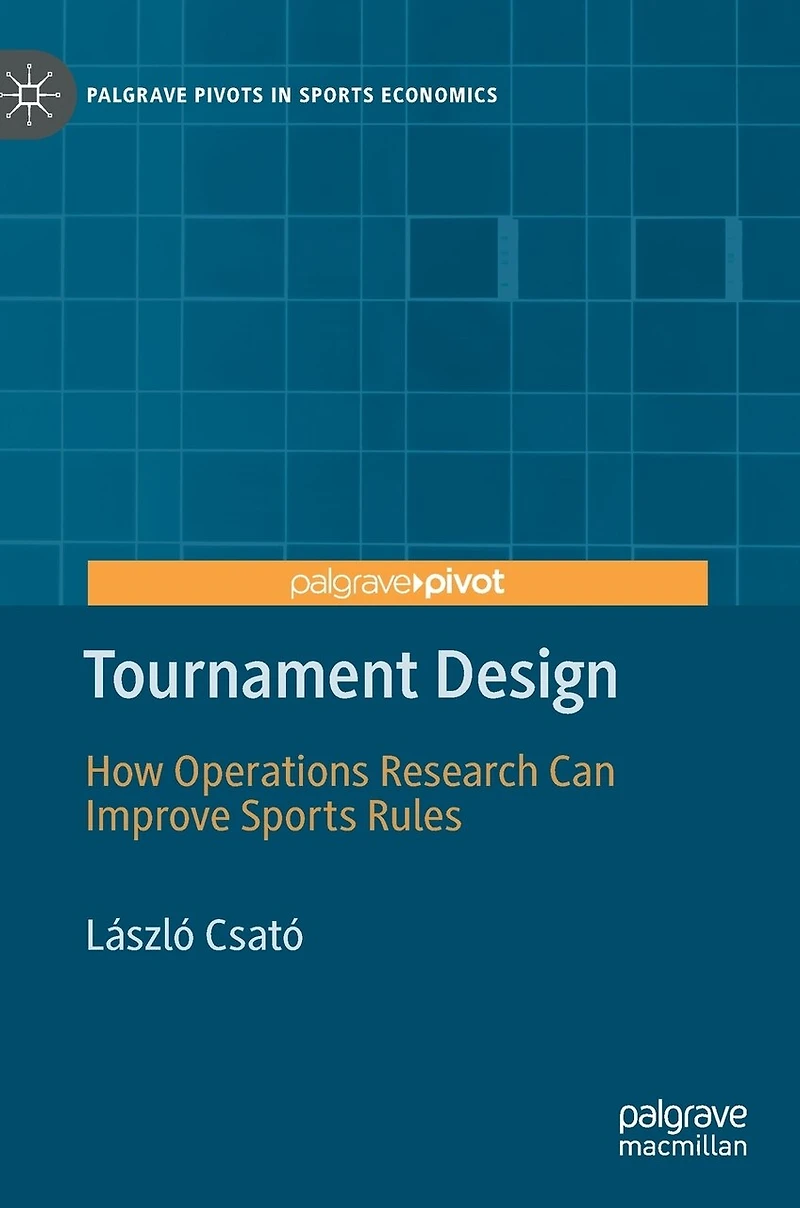
Tournament Design: How Operations Research Can Improve Sports Rules
Coles
Loading Inventory...
Tournament Design: How Operations Research Can Improve Sports Rules in Ottawa, ON
Current price: $94.95

Tournament Design: How Operations Research Can Improve Sports Rules in Ottawa, ON
Current price: $94.95
Loading Inventory...
Size: Hardcover
*Product information may vary - to confirm product availability, pricing, shipping and return information please contact Coles
This Palgrave Pivot presents tournament design mainly within the axioms of incentive compatibility and fairness. It illustrates the advantages of an axiomatic approach through various examples, including several FIFA and UEFA tournaments, and uses theoretical tools and simulation methodology in its analysis. Chapter 1 discusses scoring systems of championships with multiple competitions, ranking in Swiss-system tournaments, and tie-breaking rules in round-robin leagues. It is followed by a thorough critical analysis of the current and previous FIFA World Rankings. The broad focus is substantially narrowed in Chapter 2, which turns to the topic of incentive (in)compatibility in multiple qualifiers. It is revealed that UEFA has faced at least three times recently this problem in the qualification to the UEFA Europa League, qualification to the UEFA Champions League, and the draw of the UEFA Champions League groups. Analogously, Chapter 3 discusses incentive (in)compatibility when there is only one group-based tournament but the complex progression rules to the subsequent stage can be designed poorly. Our examples include the qualifying tournaments of recent FIFA World Cups and UEFA European Championships. Chapter 4 moves to the problem of penalty shootout rules in soccer, where the fairness and complexity of some alternative mechanisms from the literature are evaluated. Fairness remains the central issue in Chapter 5, which presents the challenges of designing a tournament with 24 teams if the number of teams per group cannot exceed four. As expected, there is no perfect solution, and both FIFA and UEFA have introduced a reform in this format recently. Chapter 6 deals with the qualification for the 2020 UEFA European Football Championship. Its tournament design is perhaps the most complicated one that has ever been implemented in the real-world and suffers from serious shortcomings.
This Palgrave Pivot presents tournament design mainly within the axioms of incentive compatibility and fairness. It illustrates the advantages of an axiomatic approach through various examples, including several FIFA and UEFA tournaments, and uses theoretical tools and simulation methodology in its analysis. Chapter 1 discusses scoring systems of championships with multiple competitions, ranking in Swiss-system tournaments, and tie-breaking rules in round-robin leagues. It is followed by a thorough critical analysis of the current and previous FIFA World Rankings. The broad focus is substantially narrowed in Chapter 2, which turns to the topic of incentive (in)compatibility in multiple qualifiers. It is revealed that UEFA has faced at least three times recently this problem in the qualification to the UEFA Europa League, qualification to the UEFA Champions League, and the draw of the UEFA Champions League groups. Analogously, Chapter 3 discusses incentive (in)compatibility when there is only one group-based tournament but the complex progression rules to the subsequent stage can be designed poorly. Our examples include the qualifying tournaments of recent FIFA World Cups and UEFA European Championships. Chapter 4 moves to the problem of penalty shootout rules in soccer, where the fairness and complexity of some alternative mechanisms from the literature are evaluated. Fairness remains the central issue in Chapter 5, which presents the challenges of designing a tournament with 24 teams if the number of teams per group cannot exceed four. As expected, there is no perfect solution, and both FIFA and UEFA have introduced a reform in this format recently. Chapter 6 deals with the qualification for the 2020 UEFA European Football Championship. Its tournament design is perhaps the most complicated one that has ever been implemented in the real-world and suffers from serious shortcomings.
You May Also Like












More About Coles at Bayshore Shopping Centre
Coles is renowned for its outstanding customer service and great selection of books. Along with the vast array of magazines, stationary, audio-books, children's literature, fiction, non-fiction and reference books, you can find accessories to make your reading experience more pleasurable. We can recommend the very best in reading today. We will help you search our titles for exactly what you need, and if we do not have it in stock, we will order it for you.
100 Bayshore Dr, Nepean, ON K2B 8C1, Canada
Find Coles at Bayshore Shopping Centre in Ottawa, ON
Visit Coles at Bayshore Shopping Centre in Ottawa, ON