

Give the Gift of Choice!
Too many options? Treat your friends and family to their favourite stores with a Bayshore Shopping Centre gift card, redeemable at participating retailers throughout the centre. Click below to purchase yours today!Purchase HereHome
Toward Nationalizing Regimes: Conceptualizing Power and Identity in the Post-Soviet Realm
Coles
Loading Inventory...
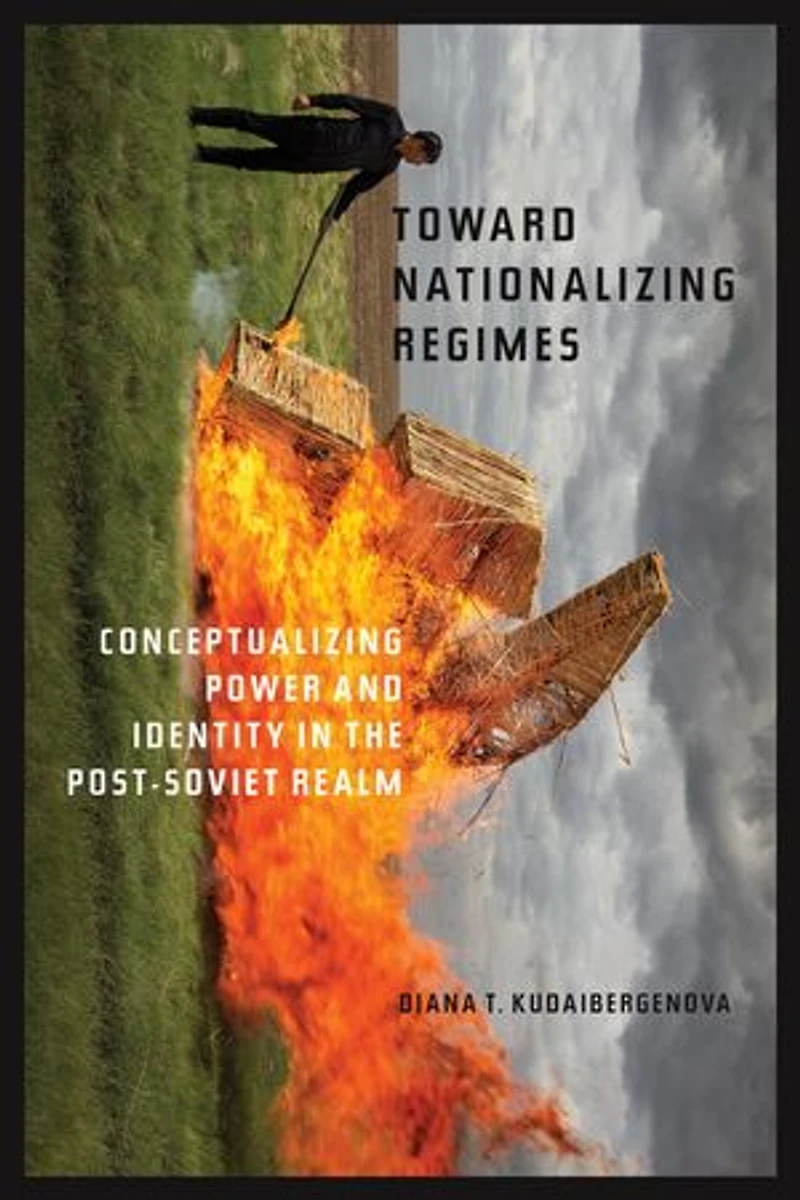
Toward Nationalizing Regimes: Conceptualizing Power and Identity in the Post-Soviet Realm in Ottawa, ON
Current price: $56.79
Original price: $70.99

Toward Nationalizing Regimes: Conceptualizing Power and Identity in the Post-Soviet Realm in Ottawa, ON
Current price: $56.79
Original price: $70.99
Loading Inventory...
Size: Kobo eBook
*Product information may vary - to confirm product availability, pricing, shipping and return information please contact Coles
Finalist, 2021 CESS Book Award
The collapse of the Soviet Union famously opened new venues for the theories of nationalism and the study of processes and actors involved in these new nation-building processes. In this comparative study, Kudaibergenova takes the new states and nations of Eurasia that emerged in 1991, Latvia and Kazakhstan, and seeks to better understand the phenomenon of post-Soviet states tapping into nationalism to build legitimacy. What explains this difference in approaching nation-building after the collapse of the Soviet Union? What can a study of two very different trajectories of development tell us about the nature of power, state and nationalizing regimes of the ‘new’ states of Eurasia? Toward Nationalizing Regimes finds surprising similarities in two such apparently different countries—one “western” and democratic, the other “eastern” and dictatorial.
Finalist, 2021 CESS Book Award
The collapse of the Soviet Union famously opened new venues for the theories of nationalism and the study of processes and actors involved in these new nation-building processes. In this comparative study, Kudaibergenova takes the new states and nations of Eurasia that emerged in 1991, Latvia and Kazakhstan, and seeks to better understand the phenomenon of post-Soviet states tapping into nationalism to build legitimacy. What explains this difference in approaching nation-building after the collapse of the Soviet Union? What can a study of two very different trajectories of development tell us about the nature of power, state and nationalizing regimes of the ‘new’ states of Eurasia? Toward Nationalizing Regimes finds surprising similarities in two such apparently different countries—one “western” and democratic, the other “eastern” and dictatorial.
You May Also Like









More About Coles at Bayshore Shopping Centre
Coles is renowned for its outstanding customer service and great selection of books. Along with the vast array of magazines, stationary, audio-books, children's literature, fiction, non-fiction and reference books, you can find accessories to make your reading experience more pleasurable. We can recommend the very best in reading today. We will help you search our titles for exactly what you need, and if we do not have it in stock, we will order it for you.
100 Bayshore Dr, Nepean, ON K2B 8C1, Canada
Find Coles at Bayshore Shopping Centre in Ottawa, ON
Visit Coles at Bayshore Shopping Centre in Ottawa, ON