

Give the Gift of Choice!
Too many options? Treat your friends and family to their favourite stores with a Bayshore Shopping Centre gift card, redeemable at participating retailers throughout the centre. Click below to purchase yours today!Purchase HereHome
Tractatus Logico-Suicidalis: On Killing Oneself
Coles
Loading Inventory...
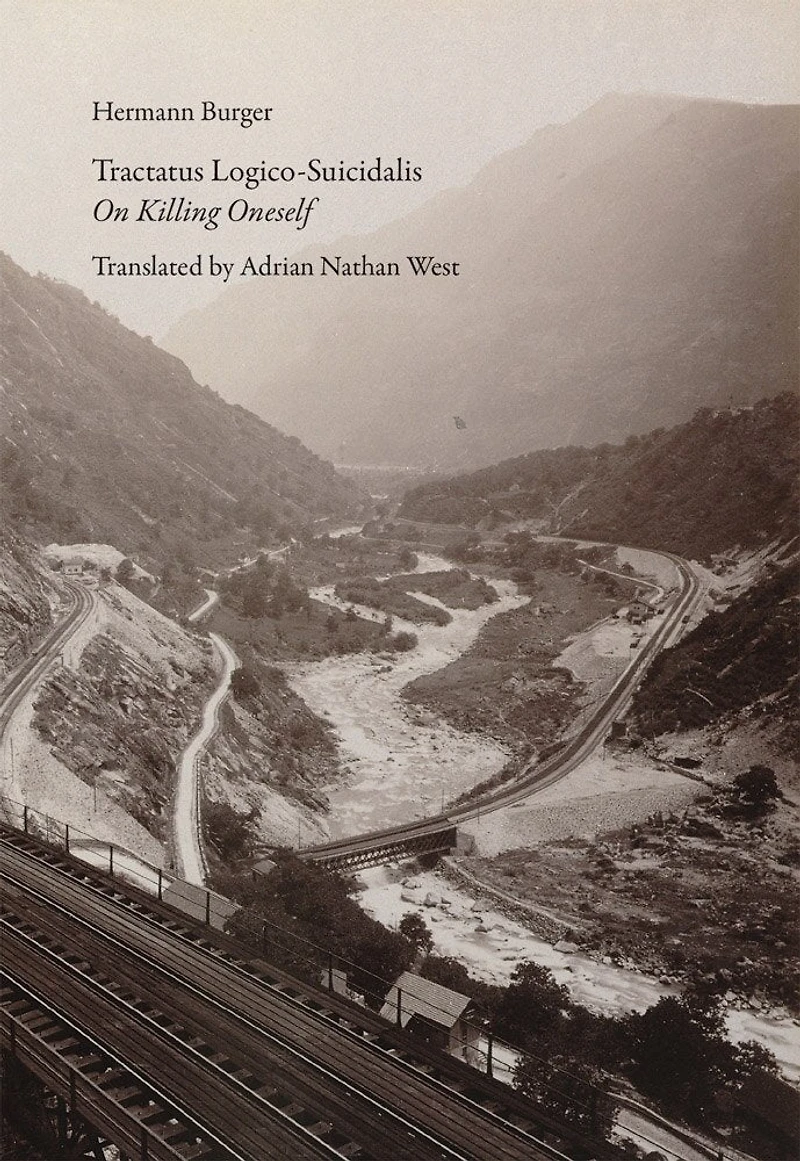
Tractatus Logico-Suicidalis: On Killing Oneself in Ottawa, ON
Current price: $27.95

Tractatus Logico-Suicidalis: On Killing Oneself in Ottawa, ON
Current price: $27.95
Loading Inventory...
Size: Paperback
*Product information may vary - to confirm product availability, pricing, shipping and return information please contact Coles
“Hermann Burger is one of the truly great authors of the German language: a writer of consummate control and range, with a singular and haunting worldview.” –Uwe Schütte In the tunnel-village of Göschenen, a man named Hermann Burger has vanished without a trace from his hotel room, suspected of suicide. What is found in his room is not a note, but a 124-page manuscript entitled Tractatus Logico-Suicidalis : an exhaustive manifesto comprising 1,046 “thanatological” aphorisms (or “mortologisms”) advocating suicide.
This “grim science of killing the self” studies the predominance of death over life, in traumatic experiences such as the breakup of a marriage, years of depression, the erosion of friendships and the disgrace of impotence—but the aphoristic text presents something more complicated than a logical conclusion to life experience. Drawing inspiration from such authors as Wittgenstein, Cioran and Bernhard, Burger’s unsettling work would be published shortly before the author would take his own life.
Hermann Burger (1942–89) was a Swiss author, critic and professor. Author of four novels and several volumes of essays, short fiction and poetry, he first achieved fame with his novel Schilten , the story of a mad village schoolteacher who teaches his students to prepare for death. At the end of his life, he was working on the autobiographical tetralogy Brenner , one of the high points of 20th-century German prose. He died by overdose days after the first volume’s publication.
“Hermann Burger is one of the truly great authors of the German language: a writer of consummate control and range, with a singular and haunting worldview.” –Uwe Schütte In the tunnel-village of Göschenen, a man named Hermann Burger has vanished without a trace from his hotel room, suspected of suicide. What is found in his room is not a note, but a 124-page manuscript entitled Tractatus Logico-Suicidalis : an exhaustive manifesto comprising 1,046 “thanatological” aphorisms (or “mortologisms”) advocating suicide.
This “grim science of killing the self” studies the predominance of death over life, in traumatic experiences such as the breakup of a marriage, years of depression, the erosion of friendships and the disgrace of impotence—but the aphoristic text presents something more complicated than a logical conclusion to life experience. Drawing inspiration from such authors as Wittgenstein, Cioran and Bernhard, Burger’s unsettling work would be published shortly before the author would take his own life.
Hermann Burger (1942–89) was a Swiss author, critic and professor. Author of four novels and several volumes of essays, short fiction and poetry, he first achieved fame with his novel Schilten , the story of a mad village schoolteacher who teaches his students to prepare for death. At the end of his life, he was working on the autobiographical tetralogy Brenner , one of the high points of 20th-century German prose. He died by overdose days after the first volume’s publication.
You May Also Like







More About Coles at Bayshore Shopping Centre
Coles is renowned for its outstanding customer service and great selection of books. Along with the vast array of magazines, stationary, audio-books, children's literature, fiction, non-fiction and reference books, you can find accessories to make your reading experience more pleasurable. We can recommend the very best in reading today. We will help you search our titles for exactly what you need, and if we do not have it in stock, we will order it for you.
100 Bayshore Dr, Nepean, ON K2B 8C1, Canada
Find Coles at Bayshore Shopping Centre in Ottawa, ON
Visit Coles at Bayshore Shopping Centre in Ottawa, ON