

Give the Gift of Choice!
Too many options? Treat your friends and family to their favourite stores with a Bayshore Shopping Centre gift card, redeemable at participating retailers throughout the centre. Click below to purchase yours today!Purchase HereHome
Transactions on Computational Science II
Coles
Loading Inventory...
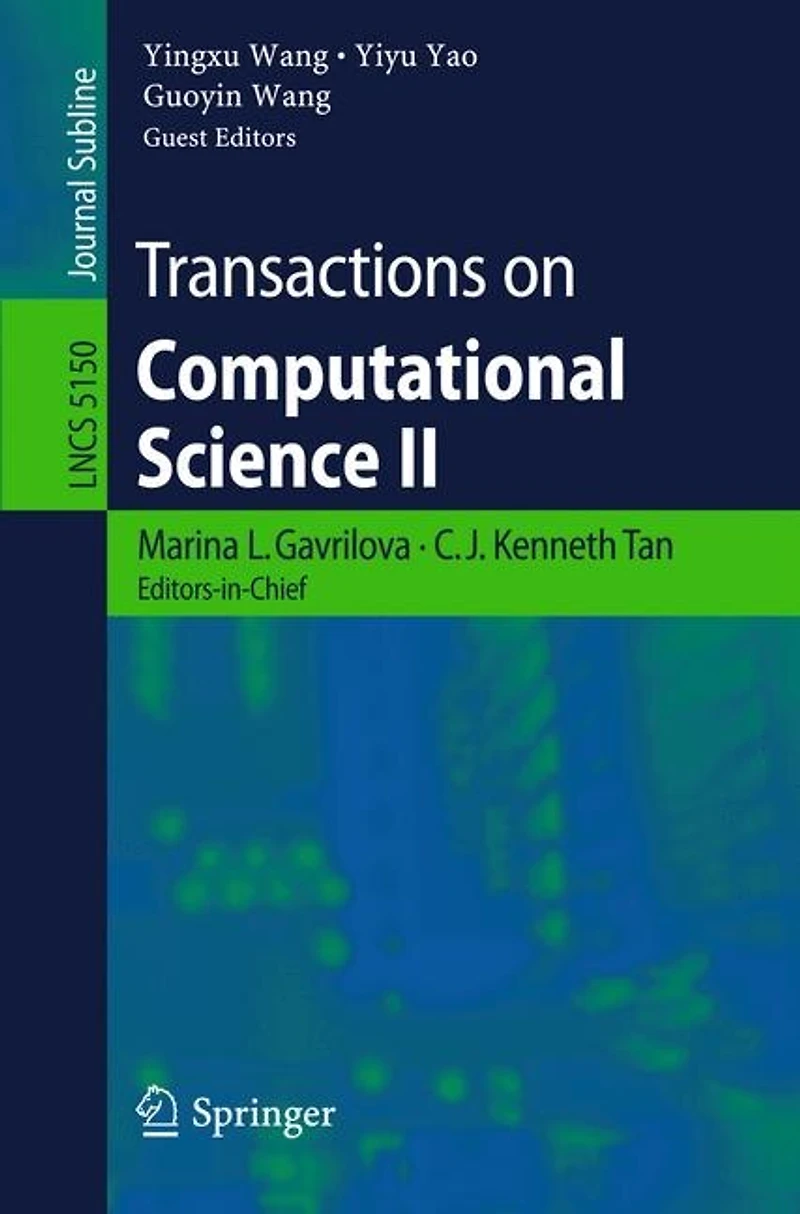
Transactions on Computational Science II in Ottawa, ON
Current price: $80.50

Transactions on Computational Science II in Ottawa, ON
Current price: $80.50
Loading Inventory...
Size: Paperback
*Product information may vary - to confirm product availability, pricing, shipping and return information please contact Coles
The denotational and expressive needs in cognitive informatics, computational intelligence, software engineering, and knowledge engineering have led to the development of new forms of mathematics collectively known as denotational mathematics. Denotational mathematics is a category of mathematical structures that formalize rigorous expressions and long-chain inferences of system compositions and behaviors with abstract concepts, complex relations, and dynamic processes. Typical paradigms of denotational mathematics are concept algebra, system algebra, Real-Time Process Algebra (RTPA), Visual Semantic Algebra (VSA), fuzzy logic, and rough sets. A wide range of applications of denotational mathematics have been identified in many modern science and engineering disciplines that deal with complex and intricate mathematical entities and structures beyond numbers, Boolean variables, and traditional sets. This issue of Springer's Transactions on Computational Science on Denotational Mathematics for Computational Intelligence presents a snapshot of current research on denotational mathematics and its engineering applications. The volume includes selected and extended papers from two international conferences, namely IEEE ICCI 2006 (on Cognitive Informatics) and RSKT 2006 (on Rough Sets and Knowledge Technology), as well as new contributions. The following four important areas in denotational mathem- ics and its applications are covered: Foundations and applications of denotational mathematics, focusing on: a) c- temporary denotational mathematics for computational intelligence; b) deno- tional mathematical laws of software; c) a comparative study of STOPA and RTPA; and d) a denotational mathematical model of abstract games.
The denotational and expressive needs in cognitive informatics, computational intelligence, software engineering, and knowledge engineering have led to the development of new forms of mathematics collectively known as denotational mathematics. Denotational mathematics is a category of mathematical structures that formalize rigorous expressions and long-chain inferences of system compositions and behaviors with abstract concepts, complex relations, and dynamic processes. Typical paradigms of denotational mathematics are concept algebra, system algebra, Real-Time Process Algebra (RTPA), Visual Semantic Algebra (VSA), fuzzy logic, and rough sets. A wide range of applications of denotational mathematics have been identified in many modern science and engineering disciplines that deal with complex and intricate mathematical entities and structures beyond numbers, Boolean variables, and traditional sets. This issue of Springer's Transactions on Computational Science on Denotational Mathematics for Computational Intelligence presents a snapshot of current research on denotational mathematics and its engineering applications. The volume includes selected and extended papers from two international conferences, namely IEEE ICCI 2006 (on Cognitive Informatics) and RSKT 2006 (on Rough Sets and Knowledge Technology), as well as new contributions. The following four important areas in denotational mathem- ics and its applications are covered: Foundations and applications of denotational mathematics, focusing on: a) c- temporary denotational mathematics for computational intelligence; b) deno- tional mathematical laws of software; c) a comparative study of STOPA and RTPA; and d) a denotational mathematical model of abstract games.
You May Also Like












More About Coles at Bayshore Shopping Centre
Coles is renowned for its outstanding customer service and great selection of books. Along with the vast array of magazines, stationary, audio-books, children's literature, fiction, non-fiction and reference books, you can find accessories to make your reading experience more pleasurable. We can recommend the very best in reading today. We will help you search our titles for exactly what you need, and if we do not have it in stock, we will order it for you.
100 Bayshore Dr, Nepean, ON K2B 8C1, Canada
Find Coles at Bayshore Shopping Centre in Ottawa, ON
Visit Coles at Bayshore Shopping Centre in Ottawa, ON