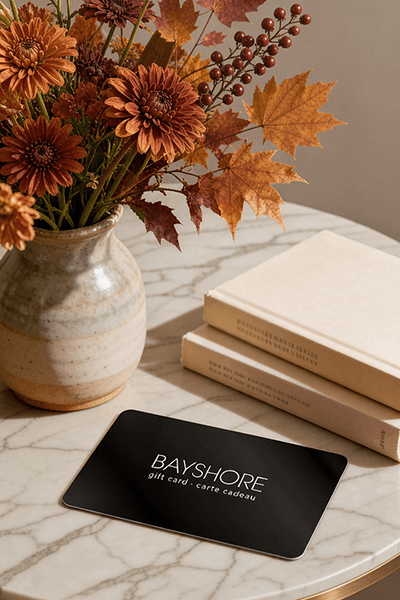
Too many options? Treat your friends and family to their favourite stores with a Bayshore Shopping Centre gift card, redeemable at participating retailers throughout the centre. Click below to purchase yours today!Purchase Here
Coles Transforming Learning Through Tangible Instruction: The Case for Thinking With Things at Bayshore Shopping Centre in Ottawa, ON
*Product information may vary - to confirm product availability, pricing, shipping and return information please contact Coles
Transforming Learning Through Tangible Instruction offers a transformative, student-centered approach to higher education pedagogy that integrates embodied cognition into classroom practice. Evidence across disciplines makes clear that people learn with their bodies as well as their brains, but no previous book has provided evidence-based guidance for adopting and refining its practice in colleges and universities. Collecting findings from cognitive science, educational neuroscience, learning theories, and beyond, this volume's unique approach-radical yet practical, effective yet low-cost-will have profound implications for higher education faculty and administrators engaged in teaching and learning. Seven concise chapters explore how physical objects, hands-on making, active construction, and other elements of body and environment can enhance comprehension, memory, and individual and collaborative learning.
Transforming Learning Through Tangible Instruction offers a transformative, student-centered approach to higher education pedagogy that integrates embodied cognition into classroom practice. Evidence across disciplines makes clear that people learn with their bodies as well as their brains, but no previous book has provided evidence-based guidance for adopting and refining its practice in colleges and universities. Collecting findings from cognitive science, educational neuroscience, learning theories, and beyond, this volume's unique approach-radical yet practical, effective yet low-cost-will have profound implications for higher education faculty and administrators engaged in teaching and learning. Seven concise chapters explore how physical objects, hands-on making, active construction, and other elements of body and environment can enhance comprehension, memory, and individual and collaborative learning.
Coles is renowned for its outstanding customer service and great selection of books. Along with the vast array of magazines, stationary, audio-books, children's literature, fiction, non-fiction and reference books, you can find accessories to make your reading experience more pleasurable. We can recommend the very best in reading today. We will help you search our titles for exactly what you need, and if we do not have it in stock, we will order it for you.