

Give the Gift of Choice!
Too many options? Treat your friends and family to their favourite stores with a Bayshore Shopping Centre gift card, redeemable at participating retailers throughout the centre. Click below to purchase yours today!Purchase HereHome
Tunisia's National Intelligence by Noureddine Jebnoun, Paperback | Indigo Chapters
Coles
Loading Inventory...
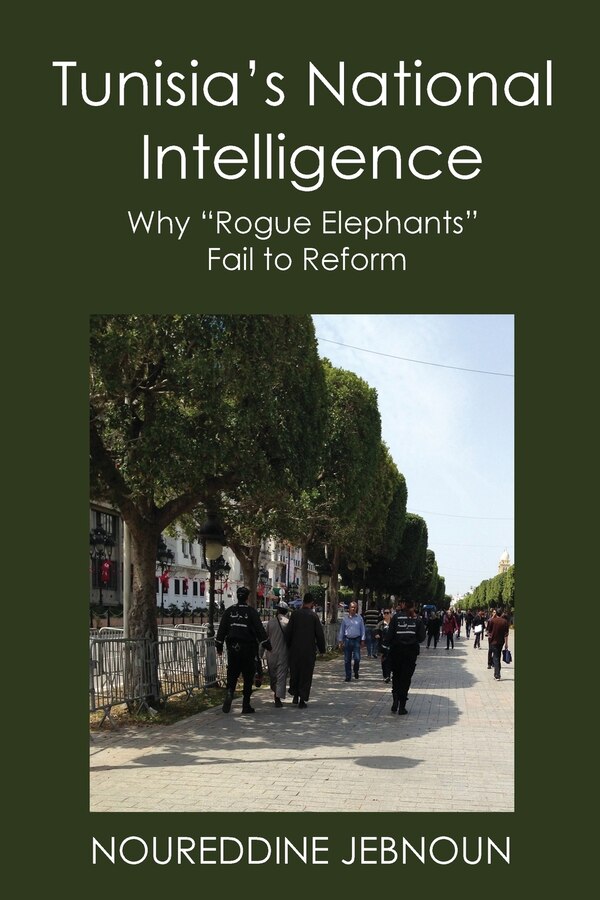
Tunisia's National Intelligence by Noureddine Jebnoun, Paperback | Indigo Chapters in Ottawa, ON
From Noureddine Jebnoun
Current price: $24.00

From Noureddine Jebnoun
Tunisia's National Intelligence by Noureddine Jebnoun, Paperback | Indigo Chapters in Ottawa, ON
Current price: $24.00
Loading Inventory...
Size: 0.39 x 9 x 0.55
*Product information may vary - to confirm product availability, pricing, shipping and return information please contact Coles
Drawing on extensive fieldwork and original data, this book examines the political and security evolution of Tunisia’s national intelligence in the post-independence era. It investigates the sophistication of the intelligence complex under Bin ?Ali and its central role in entrenching his authoritarian rule. The increased politicization of intelligence services contributed to the consolidation of power and the abuse of Tunisian citizens through the pervasive securitization of the public and private spheres and the intrusive penetration of society. The wide-range of illegal activities by Tunisia’s intelligence services contributed to the establishment of a police security state. However, these services played a critical role in its weakening through their lack of professionalism, their opacity, and their systematic use of intelligence for repression and oppression purposes. The post-uprising era created a new dilemma for intelligence organs in terms of their adjustment to the new socio-political context. The absence of appropriate political vision for the role of intelligence within an emerging democracy, the rise of insecurity in the country and across the region, and the legacy of authoritarianism are hindering any effort to introduce an appropriate reform. The difficult transition of the intelligence apparatus’ habits of state-centric security, which has been associated with the regime’s security, to the human-citizen security approach, is likely a major impediment to such reform. Thus, rather than a reform that entails democratic control, accountability, and oversight of the intelligence sector, the country’s secret apparatus experienced a mending process seeking mainly to improve its operational capabilities driven by the discourse of technicalities. | Tunisia's National Intelligence by Noureddine Jebnoun, Paperback | Indigo Chapters
Drawing on extensive fieldwork and original data, this book examines the political and security evolution of Tunisia’s national intelligence in the post-independence era. It investigates the sophistication of the intelligence complex under Bin ?Ali and its central role in entrenching his authoritarian rule. The increased politicization of intelligence services contributed to the consolidation of power and the abuse of Tunisian citizens through the pervasive securitization of the public and private spheres and the intrusive penetration of society. The wide-range of illegal activities by Tunisia’s intelligence services contributed to the establishment of a police security state. However, these services played a critical role in its weakening through their lack of professionalism, their opacity, and their systematic use of intelligence for repression and oppression purposes. The post-uprising era created a new dilemma for intelligence organs in terms of their adjustment to the new socio-political context. The absence of appropriate political vision for the role of intelligence within an emerging democracy, the rise of insecurity in the country and across the region, and the legacy of authoritarianism are hindering any effort to introduce an appropriate reform. The difficult transition of the intelligence apparatus’ habits of state-centric security, which has been associated with the regime’s security, to the human-citizen security approach, is likely a major impediment to such reform. Thus, rather than a reform that entails democratic control, accountability, and oversight of the intelligence sector, the country’s secret apparatus experienced a mending process seeking mainly to improve its operational capabilities driven by the discourse of technicalities. | Tunisia's National Intelligence by Noureddine Jebnoun, Paperback | Indigo Chapters
You May Also Like

















More About Coles at Bayshore Shopping Centre
Coles is renowned for its outstanding customer service and great selection of books. Along with the vast array of magazines, stationary, audio-books, children's literature, fiction, non-fiction and reference books, you can find accessories to make your reading experience more pleasurable. We can recommend the very best in reading today. We will help you search our titles for exactly what you need, and if we do not have it in stock, we will order it for you.
100 Bayshore Dr, Nepean, ON K2B 8C1, Canada
Find Coles at Bayshore Shopping Centre in Ottawa, ON
Visit Coles at Bayshore Shopping Centre in Ottawa, ON