

Give the Gift of Choice!
Too many options? Treat your friends and family to their favourite stores with a Bayshore Shopping Centre gift card, redeemable at participating retailers throughout the centre. Click below to purchase yours today!Purchase HereHome
Unbuttoning America by Ardis Cameron, Paper over Board | Indigo Chapters
Coles
Loading Inventory...
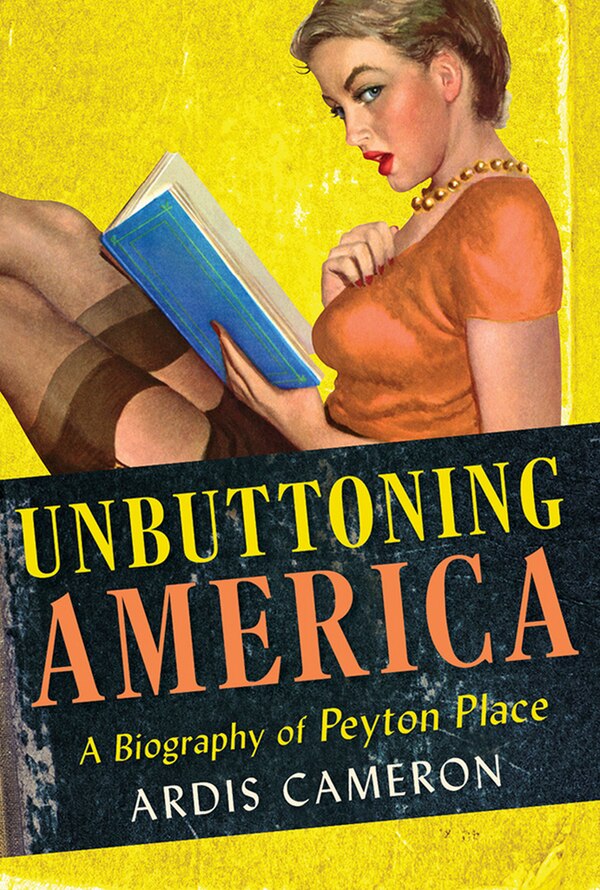
Unbuttoning America by Ardis Cameron, Paper over Board | Indigo Chapters in Ottawa, ON
From Ardis Cameron
Current price: $33.95

From Ardis Cameron
Unbuttoning America by Ardis Cameron, Paper over Board | Indigo Chapters in Ottawa, ON
Current price: $33.95
Loading Inventory...
Size: 2.54 x 22.86 x 454
*Product information may vary - to confirm product availability, pricing, shipping and return information please contact Coles
Published in 1956, Peyton Place became a bestseller and a literary phenomenon. A lurid and gripping story of murder, incest, female desire, and social injustice, it was consumed as avidly by readers as it was condemned by critics and the clergy. Its author, Grace Metalious, a housewife who grew up in poverty in a New Hampshire mill town and had aspired to be a writer from childhood, loosely based the novel's setting, characters, and incidents on real-life places, people, and events. The novel sold more than 30 million copies in hardcover and paperback, and it was adapted into a hit Hollywood film in 1957 and a popular television series that aired from 1964 to 1969. More than half a century later, the term Peyton Place is still in circulation as a code for a community harboring sordid secrets. In Unbuttoning America, Ardis Cameron mines extensive interviews, fan letters, and archival materials including contemporary cartoons and cover images from film posters and foreign editions to tell how the story of a patricide in a small New England village circulated over time and became a cultural phenomenon. She argues that Peyton Place, with its frank discussions of poverty, sexuality, class and ethnic discrimination, and small-town hypocrisy, was more than a tawdry potboiler. Metalious's depiction of how her three central female characters come to terms with their identity as women and sexual beings anticipated second-wave feminism. More broadly, Cameron asserts, the novel was also part of a larger postwar struggle over belonging and recognition. Fictionalizing contemporary realities, Metalious pushed to the surface the hidden talk and secret rebellions of a generation no longer willing to ignore the disparities and domestic constraints of Cold War America. | Unbuttoning America by Ardis Cameron, Paper over Board | Indigo Chapters
Published in 1956, Peyton Place became a bestseller and a literary phenomenon. A lurid and gripping story of murder, incest, female desire, and social injustice, it was consumed as avidly by readers as it was condemned by critics and the clergy. Its author, Grace Metalious, a housewife who grew up in poverty in a New Hampshire mill town and had aspired to be a writer from childhood, loosely based the novel's setting, characters, and incidents on real-life places, people, and events. The novel sold more than 30 million copies in hardcover and paperback, and it was adapted into a hit Hollywood film in 1957 and a popular television series that aired from 1964 to 1969. More than half a century later, the term Peyton Place is still in circulation as a code for a community harboring sordid secrets. In Unbuttoning America, Ardis Cameron mines extensive interviews, fan letters, and archival materials including contemporary cartoons and cover images from film posters and foreign editions to tell how the story of a patricide in a small New England village circulated over time and became a cultural phenomenon. She argues that Peyton Place, with its frank discussions of poverty, sexuality, class and ethnic discrimination, and small-town hypocrisy, was more than a tawdry potboiler. Metalious's depiction of how her three central female characters come to terms with their identity as women and sexual beings anticipated second-wave feminism. More broadly, Cameron asserts, the novel was also part of a larger postwar struggle over belonging and recognition. Fictionalizing contemporary realities, Metalious pushed to the surface the hidden talk and secret rebellions of a generation no longer willing to ignore the disparities and domestic constraints of Cold War America. | Unbuttoning America by Ardis Cameron, Paper over Board | Indigo Chapters
You May Also Like
















More About Coles at Bayshore Shopping Centre
Coles is renowned for its outstanding customer service and great selection of books. Along with the vast array of magazines, stationary, audio-books, children's literature, fiction, non-fiction and reference books, you can find accessories to make your reading experience more pleasurable. We can recommend the very best in reading today. We will help you search our titles for exactly what you need, and if we do not have it in stock, we will order it for you.
100 Bayshore Dr, Nepean, ON K2B 8C1, Canada
Find Coles at Bayshore Shopping Centre in Ottawa, ON
Visit Coles at Bayshore Shopping Centre in Ottawa, ON