

Give the Gift of Choice!
Too many options? Treat your friends and family to their favourite stores with a Bayshore Shopping Centre gift card, redeemable at participating retailers throughout the centre. Click below to purchase yours today!Purchase HereHome
Vibration Behavior Ceramic-Matrix Composites
Coles
Loading Inventory...
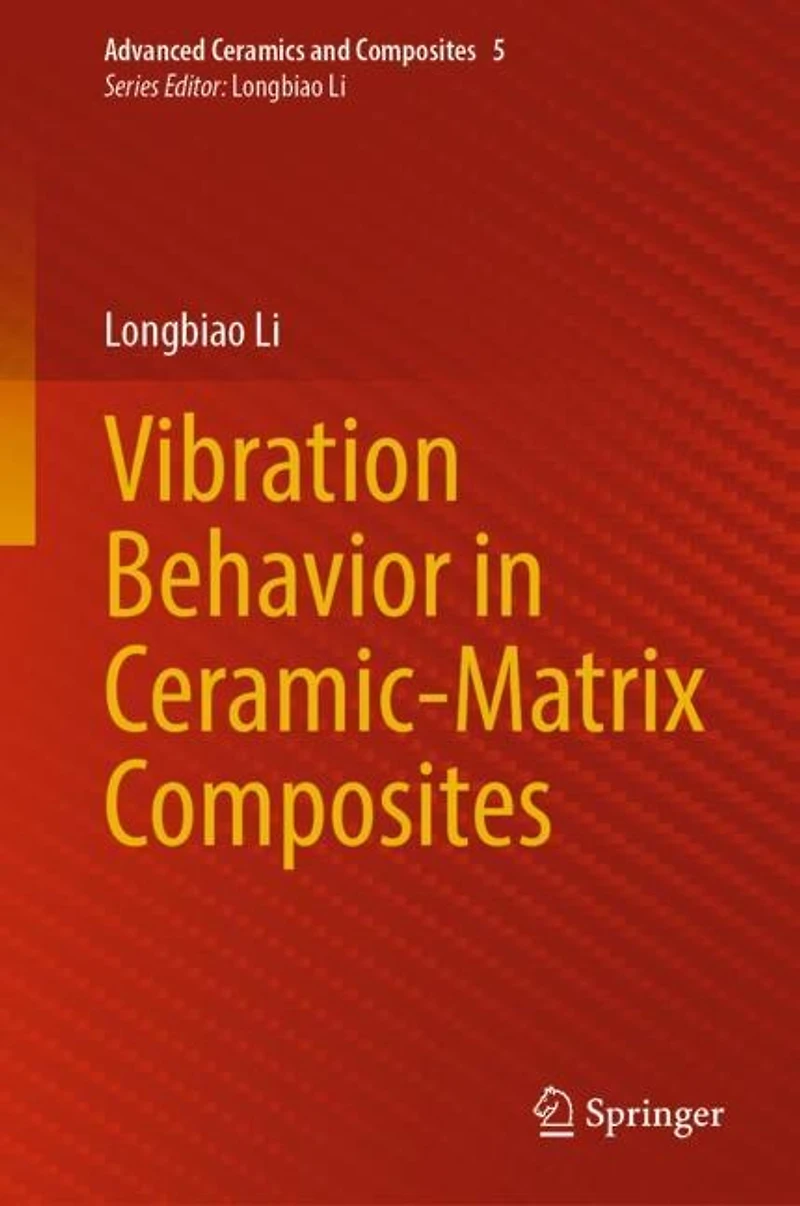
Vibration Behavior Ceramic-Matrix Composites in Ottawa, ON
Current price: $291.95

Vibration Behavior Ceramic-Matrix Composites in Ottawa, ON
Current price: $291.95
Loading Inventory...
Size: Hardcover
*Product information may vary - to confirm product availability, pricing, shipping and return information please contact Coles
This book focuses on the vibration behavior of ceramic-matrix composites (CMCs), including (1) vibration natural frequency of intact and damaged CMCs; (2) vibration damping of CMCs considering fibers debonding and fracture; (3) temperature-dependent vibration damping of CMCs; (4) time-dependent vibration damping of CMCs; and (5) cyclic-dependent vibration damping of CMCs. Ceramic-matrix composites (CMCs) possess low material density (i.e., only 1/4 or 1/3 of high-temperature alloy) and high-temperature resistance, which can reduce cooling air and improve structure efficiency. Understanding the failure mechanisms and internal damage evolution represents an important step to ensure reliability and safety of CMCs. Relationships between microstructure, damage mechanisms, vibration natural frequency, and vibration damping of CMCs are established. This book helps the material scientists and engineering designers to understand and master the vibration behavior of CMCs at room and elevated temperatures.
This book focuses on the vibration behavior of ceramic-matrix composites (CMCs), including (1) vibration natural frequency of intact and damaged CMCs; (2) vibration damping of CMCs considering fibers debonding and fracture; (3) temperature-dependent vibration damping of CMCs; (4) time-dependent vibration damping of CMCs; and (5) cyclic-dependent vibration damping of CMCs. Ceramic-matrix composites (CMCs) possess low material density (i.e., only 1/4 or 1/3 of high-temperature alloy) and high-temperature resistance, which can reduce cooling air and improve structure efficiency. Understanding the failure mechanisms and internal damage evolution represents an important step to ensure reliability and safety of CMCs. Relationships between microstructure, damage mechanisms, vibration natural frequency, and vibration damping of CMCs are established. This book helps the material scientists and engineering designers to understand and master the vibration behavior of CMCs at room and elevated temperatures.
You May Also Like









More About Coles at Bayshore Shopping Centre
Coles is renowned for its outstanding customer service and great selection of books. Along with the vast array of magazines, stationary, audio-books, children's literature, fiction, non-fiction and reference books, you can find accessories to make your reading experience more pleasurable. We can recommend the very best in reading today. We will help you search our titles for exactly what you need, and if we do not have it in stock, we will order it for you.
100 Bayshore Dr, Nepean, ON K2B 8C1, Canada
Find Coles at Bayshore Shopping Centre in Ottawa, ON
Visit Coles at Bayshore Shopping Centre in Ottawa, ON