

Give the Gift of Choice!
Too many options? Treat your friends and family to their favourite stores with a Bayshore Shopping Centre gift card, redeemable at participating retailers throughout the centre. Click below to purchase yours today!Purchase HereHome
What Made Apollo a Success?
Coles
Loading Inventory...
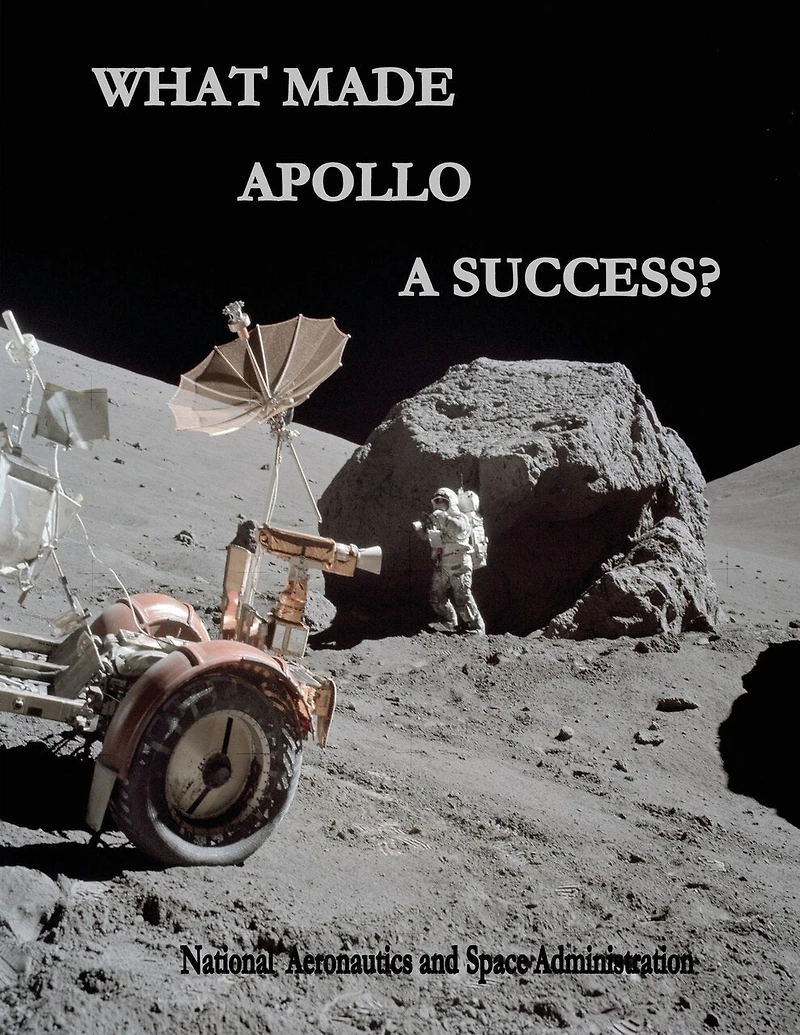
What Made Apollo a Success? in Ottawa, ON
Current price: $23.50

What Made Apollo a Success? in Ottawa, ON
Current price: $23.50
Loading Inventory...
Size: Paperback
*Product information may vary - to confirm product availability, pricing, shipping and return information please contact Coles
(Introduction by G. M. Low) On July 20, 1969, man first set foot on another planet. This "giant leap for man-kind'' represented one of the greatest engineering achievements of all time. This article and the others in this document describe and discuss some of the varied tasks behind this achievement. We will limit ourselves to those tasks that were the direct responsibility of the NASA Manned Spacecraft Center: spacecraft development, mission design and mission planning, flight crew operations, and flight operations. We will describe spacecraft design principles, the all-important spacecraft test activities, and the discipline that evolved in the control of spacecraft changes and the closeout of spacecraft anomalies; and we will discuss how we determined the best series of flights to lead to a lunar landing at the earliest possible time, how these flights were planned in detail, the techniques used in establishing flight procedures and carrying out flight operations, and, finally, crew training and simulation activities-the activities that led to a perfect flight execution by the astronauts. In short, we will describe three of the basic ingredients of the success of Apollo: spacecraft hardware that is most reliable, flight missions that are extremely well planned and executed, and flight crews that are superbly trained and skilled. (We will not discuss two equally important aspects of Apollo -the launch vehicles and launch operations. These elements, the responsibility of the NASA Marshall Space Flight Center and the NASA Kennedy Space Center, go beyond the scope of this series of articles.)
(Introduction by G. M. Low) On July 20, 1969, man first set foot on another planet. This "giant leap for man-kind'' represented one of the greatest engineering achievements of all time. This article and the others in this document describe and discuss some of the varied tasks behind this achievement. We will limit ourselves to those tasks that were the direct responsibility of the NASA Manned Spacecraft Center: spacecraft development, mission design and mission planning, flight crew operations, and flight operations. We will describe spacecraft design principles, the all-important spacecraft test activities, and the discipline that evolved in the control of spacecraft changes and the closeout of spacecraft anomalies; and we will discuss how we determined the best series of flights to lead to a lunar landing at the earliest possible time, how these flights were planned in detail, the techniques used in establishing flight procedures and carrying out flight operations, and, finally, crew training and simulation activities-the activities that led to a perfect flight execution by the astronauts. In short, we will describe three of the basic ingredients of the success of Apollo: spacecraft hardware that is most reliable, flight missions that are extremely well planned and executed, and flight crews that are superbly trained and skilled. (We will not discuss two equally important aspects of Apollo -the launch vehicles and launch operations. These elements, the responsibility of the NASA Marshall Space Flight Center and the NASA Kennedy Space Center, go beyond the scope of this series of articles.)
You May Also Like















More About Coles at Bayshore Shopping Centre
Coles is renowned for its outstanding customer service and great selection of books. Along with the vast array of magazines, stationary, audio-books, children's literature, fiction, non-fiction and reference books, you can find accessories to make your reading experience more pleasurable. We can recommend the very best in reading today. We will help you search our titles for exactly what you need, and if we do not have it in stock, we will order it for you.
100 Bayshore Dr, Nepean, ON K2B 8C1, Canada
Find Coles at Bayshore Shopping Centre in Ottawa, ON
Visit Coles at Bayshore Shopping Centre in Ottawa, ON