

Give the Gift of Choice!
Too many options? Treat your friends and family to their favourite stores with a Bayshore Shopping Centre gift card, redeemable at participating retailers throughout the centre. Click below to purchase yours today!Purchase HereHome
World Population: Past, Present, And Future
Coles
Loading Inventory...
World Population: Past, Present, And Future in Ottawa, ON
Current price: $128.50

World Population: Past, Present, And Future in Ottawa, ON
Current price: $128.50
Loading Inventory...
Size: Hardcover
*Product information may vary - to confirm product availability, pricing, shipping and return information please contact Coles
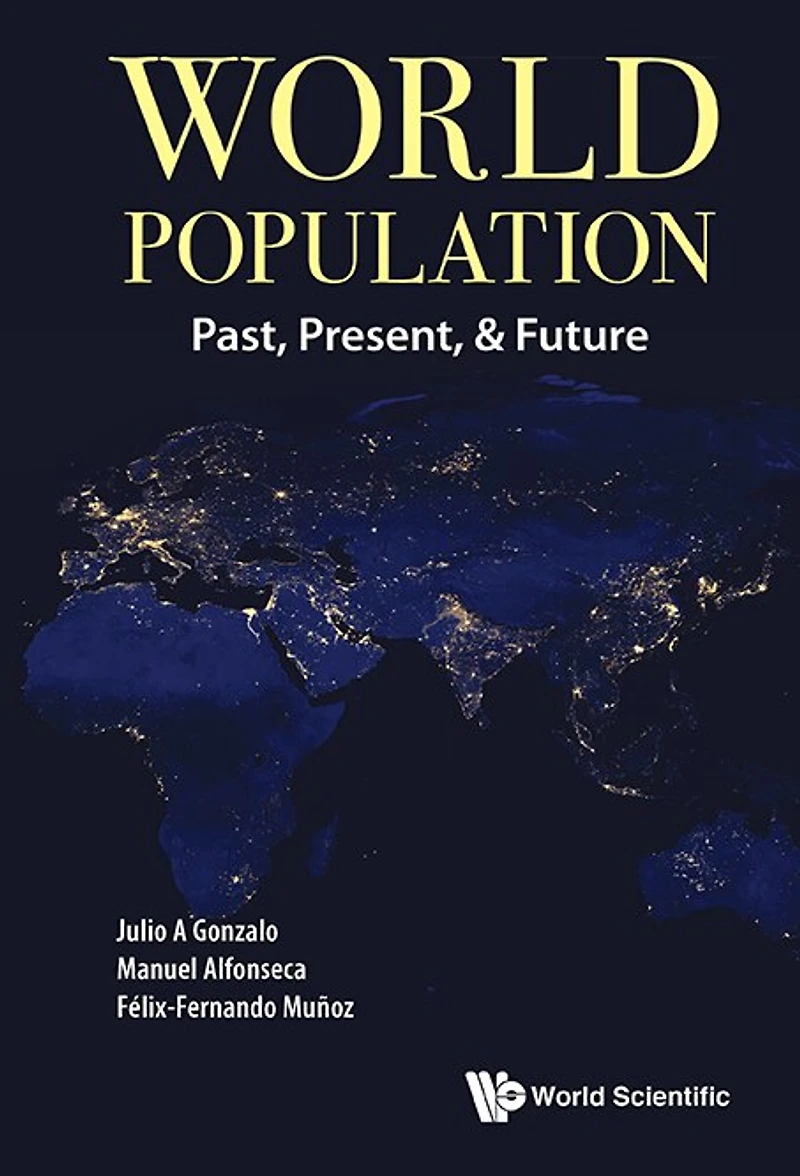
World Population: Past, Present, & Future uses a multidisciplinary approach to investigate in depth on important aspects of the evolution of world population not well addressed previously. The authors from the Universidad Autonoma, Madrid (Spain), professors Julio A Gonzalo, Manuel Alfonseca, and Félix-Fernando Muñoz, point out that the recent pronounced growth in world population (accompanied by an even more pronounced growth in agricultural production) was due mainly to the increase of life expectancy and not to the (inexistent) growth in fertility rate. Using a 'rate equations' approach for the first time, they describe population trends and forecast the possibility of steps up (or down) in population rather than the exponential growth predicted by UN demographers around 1985 and thereafter. This book provides a new perspective that our planet is not overpopulated and could, in fact, house a considerably larger population.
World Population: Past, Present, & Future uses a multidisciplinary approach to investigate in depth on important aspects of the evolution of world population not well addressed previously. The authors from the Universidad Autonoma, Madrid (Spain), professors Julio A Gonzalo, Manuel Alfonseca, and Félix-Fernando Muñoz, point out that the recent pronounced growth in world population (accompanied by an even more pronounced growth in agricultural production) was due mainly to the increase of life expectancy and not to the (inexistent) growth in fertility rate. Using a 'rate equations' approach for the first time, they describe population trends and forecast the possibility of steps up (or down) in population rather than the exponential growth predicted by UN demographers around 1985 and thereafter. This book provides a new perspective that our planet is not overpopulated and could, in fact, house a considerably larger population.
You May Also Like










More About Coles at Bayshore Shopping Centre
Coles is renowned for its outstanding customer service and great selection of books. Along with the vast array of magazines, stationary, audio-books, children's literature, fiction, non-fiction and reference books, you can find accessories to make your reading experience more pleasurable. We can recommend the very best in reading today. We will help you search our titles for exactly what you need, and if we do not have it in stock, we will order it for you.
100 Bayshore Dr, Nepean, ON K2B 8C1, Canada
Find Coles at Bayshore Shopping Centre in Ottawa, ON
Visit Coles at Bayshore Shopping Centre in Ottawa, ON