

Give the Gift of Choice!
Too many options? Treat your friends and family to their favourite stores with a Bayshore Shopping Centre gift card, redeemable at participating retailers throughout the centre. Click below to purchase yours today!Purchase HereHome
Writing Exile: The Discourse of Displacement in Greco-Roman Antiquity and Beyond
Coles
Loading Inventory...
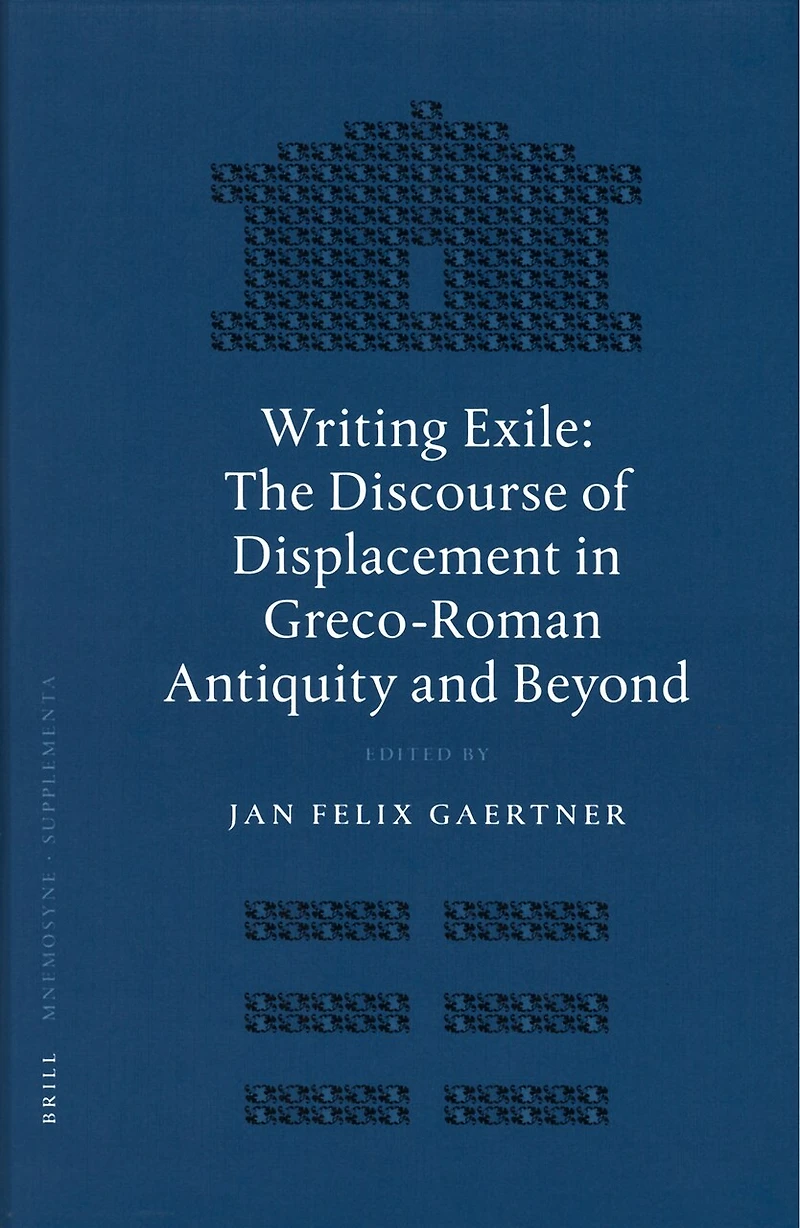
Writing Exile: The Discourse of Displacement in Greco-Roman Antiquity and Beyond in Ottawa, ON
Current price: $240.99

Writing Exile: The Discourse of Displacement in Greco-Roman Antiquity and Beyond in Ottawa, ON
Current price: $240.99
Loading Inventory...
Size: Hardcover
*Product information may vary - to confirm product availability, pricing, shipping and return information please contact Coles
Exile and displacement are central topics in classical literature. Previous research has been mostly biographical and has focused on the three most prominent exiles: Cicero, Ovid, and Seneca. By shifting focus to a discourse of exile and displacement in early Greek poetry, Greek historiography, Cynicism, consolatory literature, Latin epic, Greek literature of the empire, and Medieval Latin literature, the present volume questions the notion of a distinct, psychologically conditioned ‘genre’ or ‘mode’ of exile literature. It shows how ancient and medieval authors perceive and present their exile according to pre-existent literary paradigms, style themselves or others as ‘typical’ exiles, and employ ‘exile’ as a powerful trope to express estrangement, elicit readerly sympathy, and question political power structures.
Exile and displacement are central topics in classical literature. Previous research has been mostly biographical and has focused on the three most prominent exiles: Cicero, Ovid, and Seneca. By shifting focus to a discourse of exile and displacement in early Greek poetry, Greek historiography, Cynicism, consolatory literature, Latin epic, Greek literature of the empire, and Medieval Latin literature, the present volume questions the notion of a distinct, psychologically conditioned ‘genre’ or ‘mode’ of exile literature. It shows how ancient and medieval authors perceive and present their exile according to pre-existent literary paradigms, style themselves or others as ‘typical’ exiles, and employ ‘exile’ as a powerful trope to express estrangement, elicit readerly sympathy, and question political power structures.
You May Also Like









More About Coles at Bayshore Shopping Centre
Coles is renowned for its outstanding customer service and great selection of books. Along with the vast array of magazines, stationary, audio-books, children's literature, fiction, non-fiction and reference books, you can find accessories to make your reading experience more pleasurable. We can recommend the very best in reading today. We will help you search our titles for exactly what you need, and if we do not have it in stock, we will order it for you.
100 Bayshore Dr, Nepean, ON K2B 8C1, Canada
Find Coles at Bayshore Shopping Centre in Ottawa, ON
Visit Coles at Bayshore Shopping Centre in Ottawa, ON