

Give the Gift of Choice!
Too many options? Treat your friends and family to their favourite stores with a Bayshore Shopping Centre gift card, redeemable at participating retailers throughout the centre. Click below to purchase yours today!Purchase HereHome
Yad l'Yedinitz; memorial book for the Jewish community of Yedintzi, Bessarabia
Coles
Loading Inventory...
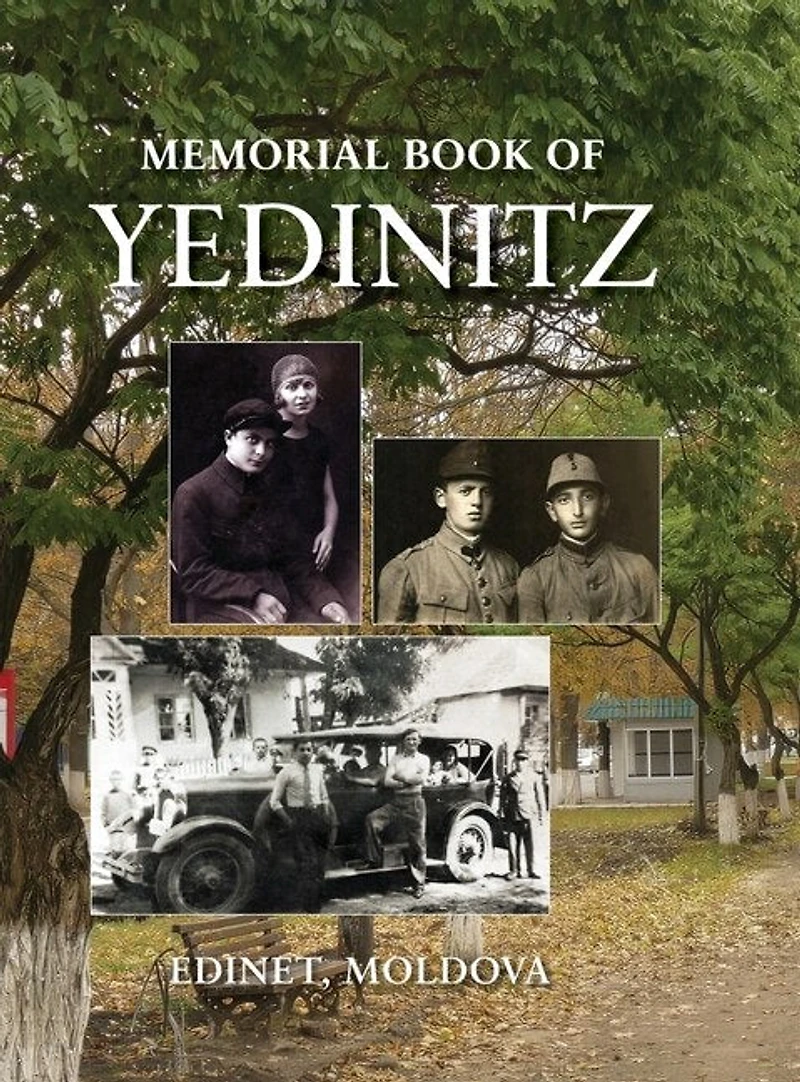
Yad l'Yedinitz; memorial book for the Jewish community of Yedintzi, Bessarabia in Ottawa, ON
Current price: $103.95

Yad l'Yedinitz; memorial book for the Jewish community of Yedintzi, Bessarabia in Ottawa, ON
Current price: $103.95
Loading Inventory...
Size: Hardcover
*Product information may vary - to confirm product availability, pricing, shipping and return information please contact Coles
Yedinitz, Bessarabia, compared to where we live today, was a small shtetl. Yet for us, it was a city. I can still see the streets and small lanes. Here is the small marketplace, the Torhovitse as we used to call it, where the peasants' fair used to take place. In the center was the church, whose bells, whenever they rang, would strike a feeling of fear in me. A few streets further away was the 'Patchova', a street where one simply took walks, where you could have a conversation with your friends, where one discussed and argued with those of opposing views, and where the meetings of young couples in love took place. This main street, more than a kilometer in length, had everything. Here could be found both small and large grain merchants. Here were displayed the workshops of blacksmiths, barrel makers, carpenters, furriers, and other workers. Here one could find little stalls, and all kinds of stores and shops. It had a bathhouse, a poorhouse, a large synagogue, and the main street going in front of and behind the marketplace. Gates. A tailor street and a Gypsy Street. Yedinitz had prestigious Jews, merchants, shopkeepers, artisans, and menial laborers. Jewish merchants and Jews in the marketplace who would sell cheese, whey, and honey. There were grain merchants, moneylenders, business owners, and numerous poor people. There were doctors and feldshers (paramedics) in the shtetl. (Excerpt from In Our Shtetl We Had... by Gedalye Gruzman).
Compiled over a period of 20 years, this is the Memorial Book of Yedinitz, written by survivors and landsmen, finally available in an English translation. These voices speak to us from the past, vividly recounting the life and destruction of a once vibrant Jewish community.
Yedinitz, Bessarabia, compared to where we live today, was a small shtetl. Yet for us, it was a city. I can still see the streets and small lanes. Here is the small marketplace, the Torhovitse as we used to call it, where the peasants' fair used to take place. In the center was the church, whose bells, whenever they rang, would strike a feeling of fear in me. A few streets further away was the 'Patchova', a street where one simply took walks, where you could have a conversation with your friends, where one discussed and argued with those of opposing views, and where the meetings of young couples in love took place. This main street, more than a kilometer in length, had everything. Here could be found both small and large grain merchants. Here were displayed the workshops of blacksmiths, barrel makers, carpenters, furriers, and other workers. Here one could find little stalls, and all kinds of stores and shops. It had a bathhouse, a poorhouse, a large synagogue, and the main street going in front of and behind the marketplace. Gates. A tailor street and a Gypsy Street. Yedinitz had prestigious Jews, merchants, shopkeepers, artisans, and menial laborers. Jewish merchants and Jews in the marketplace who would sell cheese, whey, and honey. There were grain merchants, moneylenders, business owners, and numerous poor people. There were doctors and feldshers (paramedics) in the shtetl. (Excerpt from In Our Shtetl We Had... by Gedalye Gruzman).
Compiled over a period of 20 years, this is the Memorial Book of Yedinitz, written by survivors and landsmen, finally available in an English translation. These voices speak to us from the past, vividly recounting the life and destruction of a once vibrant Jewish community.
You May Also Like









More About Coles at Bayshore Shopping Centre
Coles is renowned for its outstanding customer service and great selection of books. Along with the vast array of magazines, stationary, audio-books, children's literature, fiction, non-fiction and reference books, you can find accessories to make your reading experience more pleasurable. We can recommend the very best in reading today. We will help you search our titles for exactly what you need, and if we do not have it in stock, we will order it for you.
100 Bayshore Dr, Nepean, ON K2B 8C1, Canada
Find Coles at Bayshore Shopping Centre in Ottawa, ON
Visit Coles at Bayshore Shopping Centre in Ottawa, ON